
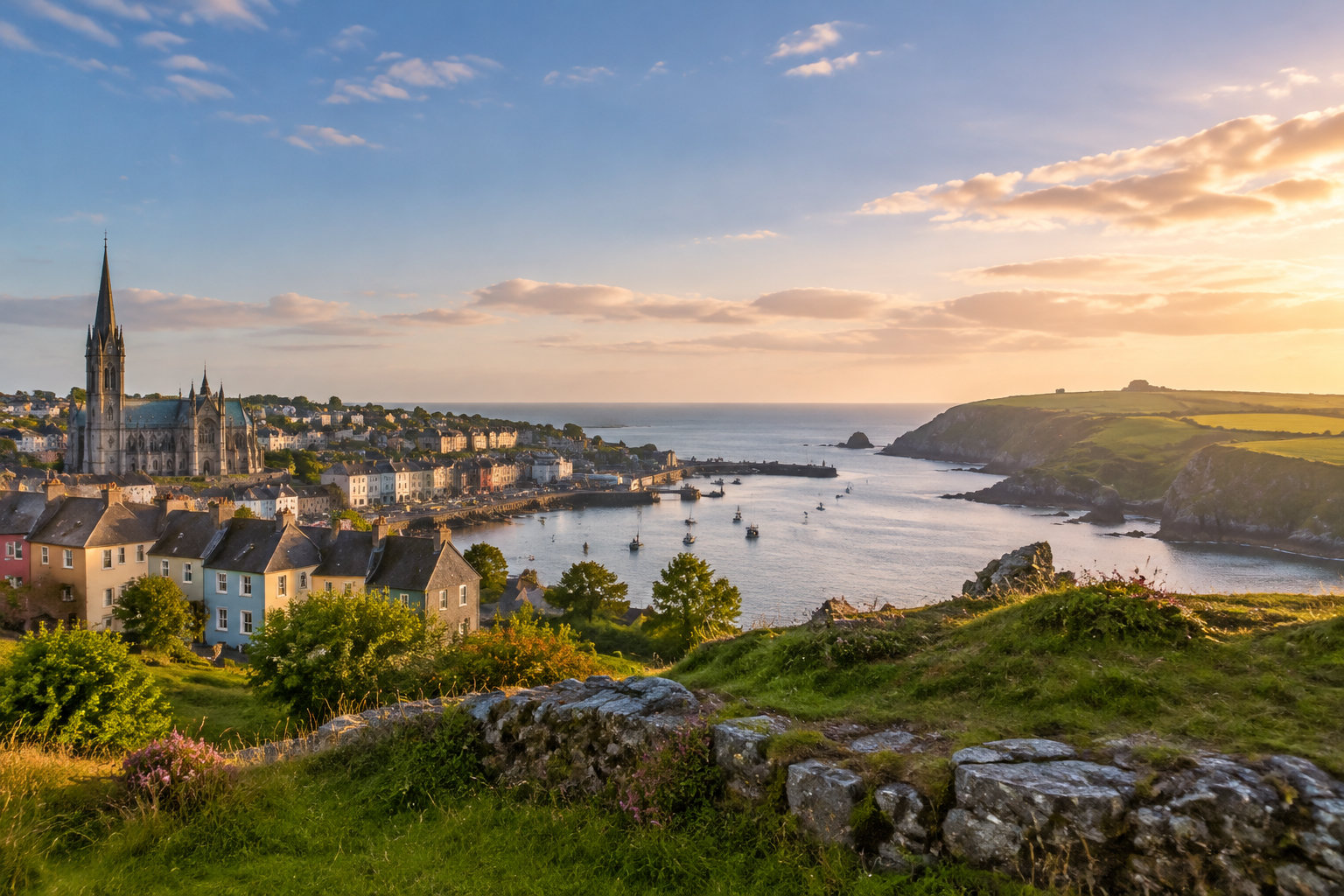
- Two full days cover the city centre, and a third adds Blarney Castle or Cork Harbour.
- Five days allow a relaxed pace, but a car makes the longer trips beyond the city much easier.
- Trains from Cork reach Fota, Cobh and Midleton, so the harbour is easy to visit without a car.
- May, June and September offer the best balance of daylight, mild weather and fewer crowds.
Contents
- How Many Days Should You Spend in Cork?
- Exploring Cork City: Markets, Cathedrals and Historic Sites
- Cork Harbour: Cobh, Spike Island and Fota
- Blarney and the Gardens West of the City
- Kinsale and the South Coast
- West Cork and Beara: Islands, Sea and Scenery
- Getting Around and Choosing When to Visit
- FAQ
Most visitors give Cork city a day, then wonder what else is worth it. The county holds far more, from harbour towns to rugged coast.
This guide covers the best things to do in Cork, Ireland, across city, coast and countryside.
How Many Days Should You Spend in Cork?
Two full days are enough to see the city centre properly: the English Market, St Fin Barre’s Cathedral, the Shandon Bells, Elizabeth Fort and, while it remains closed for renovation, Crawford Art Gallery.
If you want to add Blarney Castle or Cork Harbour, set aside a third day.
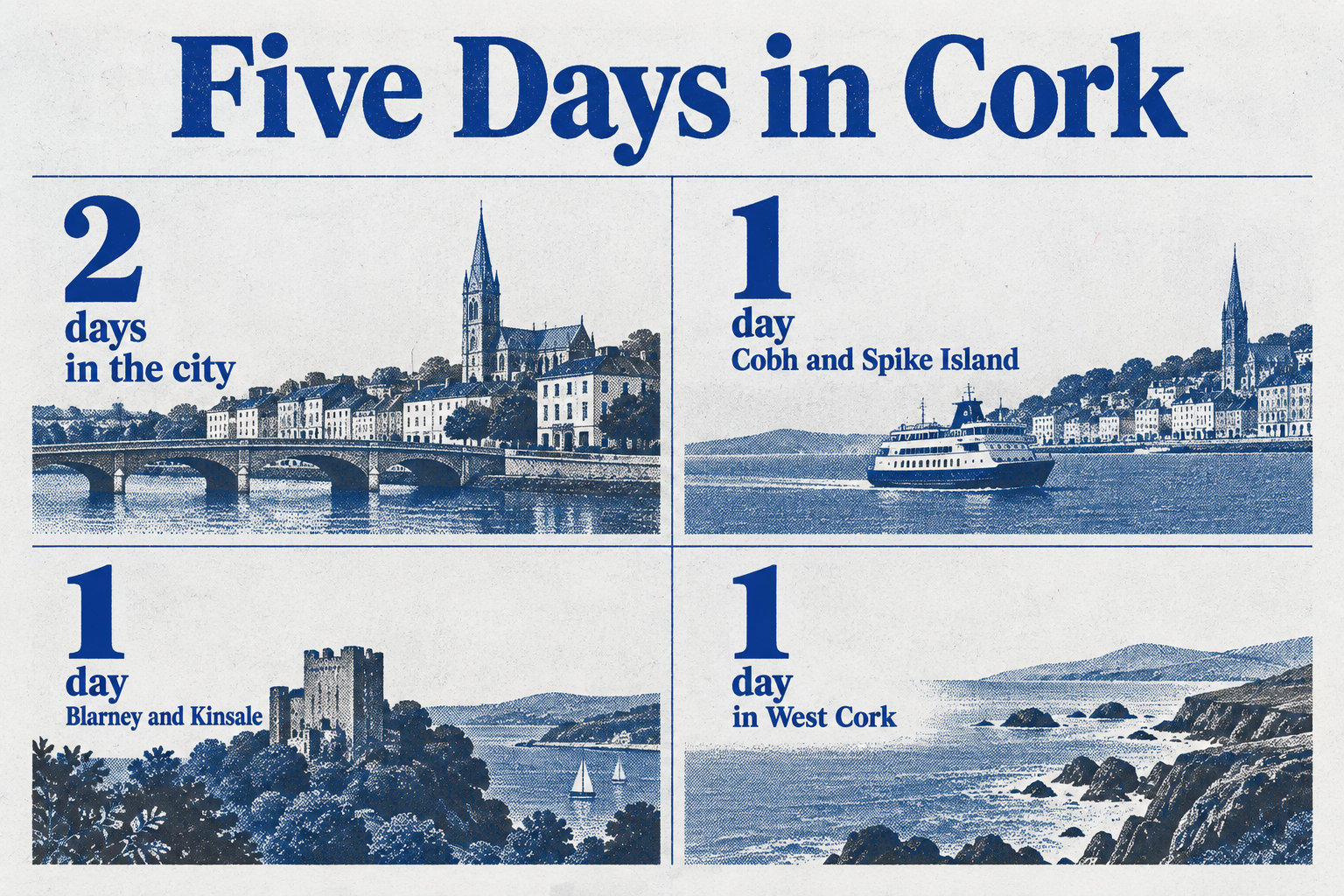
Five days allow a more relaxed pace. Spend two in the city, one on Cobh and Spike Island, one on Blarney and Kinsale, and keep one day free for West Cork.
Because several of these destinations sit well beyond the city limits, a car makes the longer trips much easier.
Exploring Cork City: Markets, Cathedrals and Historic Sites
The city centre and its food
The English Market has traded in Cork since 1788. It is the first place most visitors head for. It opens Monday to Saturday from 8:30 a.m. to 6 p.m., and it stays closed on Sundays and bank holidays. Give yourself 45 minutes to an hour. Walking in is free. Anything you eat or drink there costs extra.
Churches and views over the city
St Fin Barre’s Cathedral is a Gothic Revival building. Its carved details, stained glass and three large spires make it worth a slow look. Adults pay an admission fee, and students and seniors get reduced rates. Opening hours shift with the seasons, so go in the morning to be safe.
The Shandon Bells and Tower let you ring the bells, then enjoy views from the top. Adults, seniors, students and children each pay different rates; check the tower’s current pricing before you visit. The tower has a lot of steps, so plan accordingly.
Elizabeth Fort stands on a hill above the centre. You can walk along its star-shaped walls for free. Guided tours are available for a small fee, and the fort is generally open Tuesday to Sunday.
Museums and historic sites
Crawford Art Gallery sits in a historic building in the heart of the city. It shows Irish and European art. Entry is free. The gallery is closed for renovation, so plan another indoor option for that time.
Nano Nagle Place brings together a museum, historic buildings, gardens and a café. Allow one to one and a half hours. Adults and seniors or students pay an admission fee, and children under 16 go free.
Cork Harbour: Cobh, Spike Island and Fota
Spike Island
Spike Island was once a military fortress and later a prison. Today it has museums and walks. A full visit takes about 3.5 hours.
The ferry takes 15 minutes each way. It leaves from Kennedy Pier in Cobh, about five minutes’ walk from the railway station.
Adult tickets cost €27.95, children under 12 pay €14.95, and a family ticket is €74.95. Each ticket is for a specific sailing, so book ahead in busy months.
Fota Wildlife Park
Fota Wildlife Park is a good choice for a relaxed family outing.
Its animals roam in open-range habitats across Fota Island. A visit takes three to four hours.
Parking is charged per car, and the park is closed from 24 to 26 December.
Jameson Distillery Midleton
The guided tour of this historic distillery ends with a whiskey tasting. It lasts about 75 minutes. Tickets start at €28.
The train from Cork Kent takes around 25 minutes. You can make the trip without a car.
Blarney and the Gardens West of the City
Blarney Castle dates from the fifteenth century. It is home to the famous Blarney Stone, and the estate also has woodland paths, gardens, caves and the Rock Close. Set aside at least three hours.
Admission depends on who you are. Adults pay €24, and students and seniors €19.
Children from six to sixteen pay €12, and a family ticket costs €65.
The estate is eight kilometres northwest of Cork City. It is open all year, except on 24 and 25 December.
You don’t need a timed entry slot. Still, buying ahead lets you get started straight away.
Kinsale and the South Coast
Kinsale is a harbour town. Its streets are brightly coloured. You will find historic forts, boat trips and a strong food scene.
A full day works well: walk the town, take in the harbour views and visit Charles Fort. The fort is just outside the centre, a short taxi ride away.
West Cork and Beara: Islands, Sea and Scenery
Dursey Island
Dursey Island is reached by Ireland’s only cable car. It crosses Dursey Sound in 7.5 to 10 minutes.
Plan on at least five hours for the crossing, a walk on the island and the waiting time.
The same fares apply here as those listed earlier in this guide.
From March to October the cable car runs from 9:30 a.m. to 7:30 p.m.
From November to February it runs from 9:30 a.m. to 4:30 p.m. There is a lunch break from 1 p.m. to 1:30 p.m.
Places are first come, first served. Arrive early on a good-weather day.
Sea and outdoor activities
Guided kayaking on Castlehaven Bay or Lough Hyne shows you the coves, islands and marine life up close.
Set aside two to three hours.
Both sites are a drive from Cork City, so confirm your meeting point before you set off.
Getting Around and Choosing When to Visit
Bus Éireann routes 225 and 226 link Cork Airport with the city centre, Cork Bus Station and Kent railway station.
Buses run about every 30 minutes on weekdays and hourly on Sundays and public holidays. Route 226 goes on to Kinsale.
Trains from Cork serve Fota, Cobh and Midleton. The harbour and distillery area is the easiest part of County Cork to reach without a car.
Spring brings mild, changeable weather and longer days. Visitor numbers are moderate. The season suits city walks, the Blarney gardens and early coastal trips.
Summer offers the best chance of settled weather, though rain is still possible. Demand peaks and ferries run at their busiest. It is the season for beaches, islands, whale watching and Fastnet cruises.
Autumn brings cooler days and frequent Atlantic weather. Visitor numbers usually ease. It is the season for food trips, museums and scenic coastal drives.
Winter has short days, with wind and rain that can spoil outdoor plans. Demand is lower and schedules are reduced. Cork City, Midleton and indoor attractions are the safer choices.
For the best mix of daylight, outdoor conditions and fewer crowds, aim for May, June or September.
Settle your priorities before you book anything. Crawford Art Gallery remains closed for renovation, so plan a second indoor option for your city days, and reserve a Spike Island sailing early, since each ticket is tied to a specific crossing.
FAQ
What are some interesting things to see and do between Dublin and Cork?
Take the inland route through Kilkenny, the Rock of Cashel and Cahir, then continue south to Cork.
Kilkenny has a medieval centre, the Rock of Cashel has hilltop historic buildings, and Cahir has a castle.
What are the nicest towns in Cork?
Kinsale suits visitors who want a harbour, historic forts and a strong food scene.
Clonakilty is a smaller base in West Cork, with beaches, live music and easy access to coastal trips.
Is County Cork a good destination for outdoor activities?
Yes. County Cork offers coastal walks, island trips, whale watching, kayaking and scenic drives.
Cape Clear ferry trips and night kayaking on Lough Hyne are distinctive options. Weather can cancel departures, so check before you travel.