
The best places to visit in Ireland are not only the famous cliffs and causeways. Islands, quiet peninsulas, early Christian ruins and Neolithic tombs often leave a stronger memory than the busiest stops. This guide groups them by type of experience, so you can decide where a slower detour makes sense.
Which famous places are worth the crowds?
Some places are popular because they deliver. The Giant’s Causeway is a good example. It is a UNESCO World Heritage site, declared in 1986, and it is made of more than 40,000 interlocking basalt columns. One detail catches many planners out: it lies in Northern Ireland, not in the Republic. If your route runs through both jurisdictions, allow for that when you plan fuel, phone coverage and currency.
The Cliffs of Moher, in County Clare, are the other great set piece. At their highest point the drop to the Atlantic is 214 metres. They also shelter large seabird colonies, which is part of the reason to go. Neither the cliffs nor the birds are much use to you on a misty day, so treat the weather as a real factor. If your dates are flexible, pick the clearer morning rather than the one you had pencilled in.
A sensible approach is to take one or two of these headline stops and then spend the rest of your time on places where you can slow down.
Why do the islands deserve a night, not just a day?
Ireland’s offshore places are among its most distinctive, and they ask you to adjust your pace. You travel by boat, the timetable is set by the sea, and the land you find on arrival is different in character from the mainland.
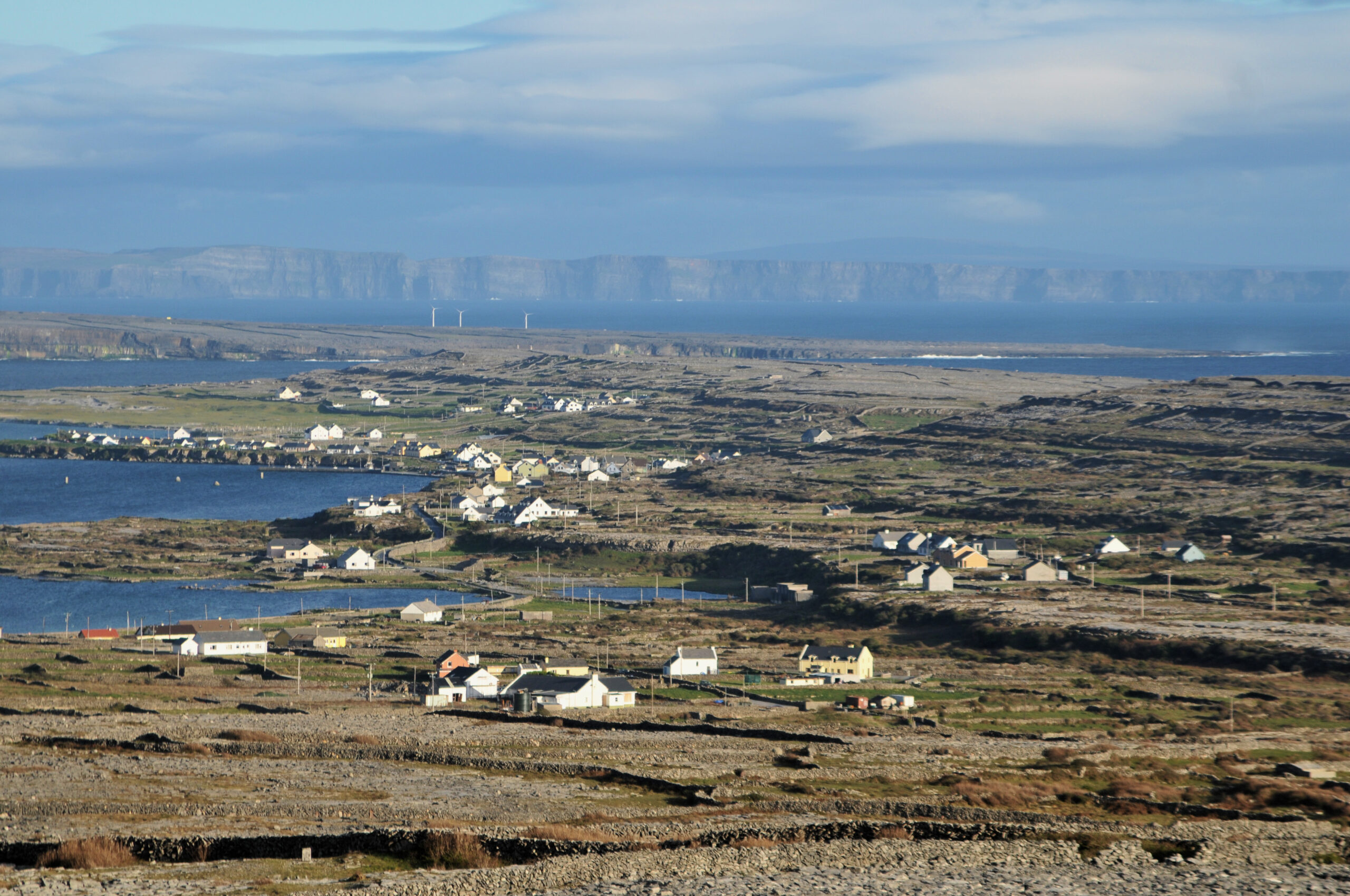
The Aran Islands, Galway Bay
The Aran Islands suit travellers who want quiet. They are known for wool and sheep, and for the stillness once the day visitors have left. The great landmark is Dún Aonghasa, an ancient fortress built right on the edge of the ocean. Stand back from the edge and take your time. Wind, wet stone and a sheer drop do not mix well.
If you can, stay overnight. The hours after the last ferry are when an island stops feeling like an attraction and starts feeling like a place where people live.
The Saltee Islands and Skellig Michael
The Saltee Islands, off the Atlantic coast, have been unoccupied since the early twentieth century. They are known for bird colonies, with fulmars, gannets, shags, kittiwakes and puffins present in the summer months, plus a colony of grey seals. That makes summer the sensible season for a visit.
Skellig Michael is a different kind of island. It holds an early Christian monastery founded in the sixth century, on a rock about 11.6 kilometres offshore. It is a UNESCO World Heritage site, and access is tightly limited, so tickets need to be secured well ahead of your trip. Do not leave this one to chance once you are already in Kerry.
How do you find the quieter side of Kerry, Clare and Donegal?
The peninsulas are where driving becomes the point of the trip rather than the way between stops. The Slea Head drive on the Dingle Peninsula is often named among the most beautiful road trips in the world. Small cottages, high mountains and sea views make it rewarding even in poor weather, which is useful in a country where good weather cannot be promised.
Further north, Malin Head is Ireland’s most northerly point. It combines high cliffs with open coastal scenery, and you will need to walk a little to reach the end of it. That short walk is the reason it feels like an arrival rather than a car park viewpoint. Wear proper shoes and bring a windproof layer whatever the forecast says.
A few habits make peninsula travel easier:
- Drive slowly and use the pull-in spots, because the roads are narrow and local drivers will want to pass.
- Choose one peninsula per day rather than trying to stack several.
- Leave unscheduled time for a harbour, a pub or a short coastal path that you notice along the way.
The same logic applies to lesser-known peninsulas such as Inishowen in Donegal and Beara in Cork and Kerry. They are quieter than the best-known drives and reward the same patient approach, although the sources used for this guide do not cover them in detail, so check current local information before you commit to a route.
Where can you walk through Ireland’s oldest history?
Ireland packs an unusual amount of early history into small areas, and much of it is open to visitors.
Brú Na Bóinne is a UNESCO World Heritage site that has been a centre of human settlement for at least 6,000 years. Its highlights include the Newgrange passage grave and other Neolithic monuments that predate the Egyptian pyramids. It is worth reading a little about the monuments beforehand, since the stones mean more when you know what they were for.
The Rock of Cashel carries a different layer. According to tradition, this is where St Patrick persuaded the King of Munster to convert to Christianity in the fifth century. Whether or not you take the story literally, the site is one of the few places in Europe where you can see early medieval architecture and Celtic art together.
Clonmacnoise, the ancient monastery in County Offaly, is another place where the ruins still carry weight. In 1979 Pope John Paul II chose it as the first stop of his second day in Ireland, speaking to 20,000 people there. Visits like that show how long the site has mattered to the country, well beyond the age of its stones.
Kylemore Abbey, a Benedictine monastery, belongs in a lighter category. Its gardens have been open to the public since the 1970s, and the Victorian Gardens and nature walks make it easy to fill a half day.
What about forests, towns and the practical side of planning?
Killarney National Park is a place of old forest, a large lake and Muckross House. Cycling is a pleasant way to cover the ground, and the old trees give the park a stillness that surprises many first-time visitors.
Galway is a compact port town on the west coast, often described as Ireland’s cultural heart. Festivals run through the year and the pubs are lively.
Planning is where a trip like this succeeds or fails. A few principles hold up:
- Match the season to the place. Seabird colonies are a summer draw, and misty days spoil the cliffs.
- Book limited-access sites early, especially Skellig Michael.
- Choose fewer bases and stay longer. One or two nights in a single place beats a new bed every evening.
- Expect rain at any time of year and pack for it.
- Keep a printed guidebook or offline map, because coverage on islands and peninsulas can be patchy.
If you are building a route, a rough pattern works well: one headline sight, one island or peninsula, one historic site, and one slow town stop. That mix gives you contrast without exhausting you, and it leaves room for the unplanned detour that people most often remember afterwards.
Related reading
Sources
- The 20 best things to do in Ireland [detailed travel guide] (annees-de-pelerinage.com, accessed 2026-11-02)
- 1979 visit by Pope John Paul II to Ireland — Wikipédia (en.wikipedia.org, accessed 2026-11-02)
Photo: View over Inishmore Aran Islands, by Tuoermin, CC BY 3.0 (Wikimedia, via Openverse)