What a Gaeltacht is, and what it is not
A Gaeltacht is an officially designated district in which Irish is a community language rather than a school subject. The designation carries real weight: state support, Irish-medium schooling, specific planning and language provisions, and a body of public administration conducted through Irish. It is a legal and administrative status attached to living places, not a theme park or a heritage zone.
It is worth being clear about what that does and does not mean on the ground. Everyone you meet in a Kerry Gaeltacht also speaks English, fluently, and will use it with you without being asked. The proportion of daily life carried on in Irish varies enormously from one townland to the next and from one generation to the next. You will hear Irish in shops, on the pier and in the pub in some places and almost not at all in others a few kilometres away. That unevenness is the honest picture, and residents are generally the first to say so.
Where the Gaeltacht is in Kerry
Kerry has two Gaeltacht areas, both on the western peninsulas.
The larger and better known is Corca Dhuibhne, the western end of the Dingle Peninsula. Roughly speaking it takes in the country west of Dingle town — Ventry, Ballyferriter, Dunquin, Feohanagh and the ground under Mount Brandon — along with the Blasket Islands offshore. This is one of the more robust Irish-speaking districts in the country and is a long-standing destination for people coming to learn or improve the language.
The second is in south Kerry, on the Iveragh Peninsula, centred on Ballinskelligs and the surrounding townlands near the western tip. It is smaller and the language is under more pressure there, but it is an active Gaeltacht with its own institutions and its own strong sense of itself.
If you are driving the Ring of Kerry or the Dingle Peninsula you will pass through or beside both without necessarily noticing, which is rather the point.
Signs, place names and the moment of confusion
Why the signs change
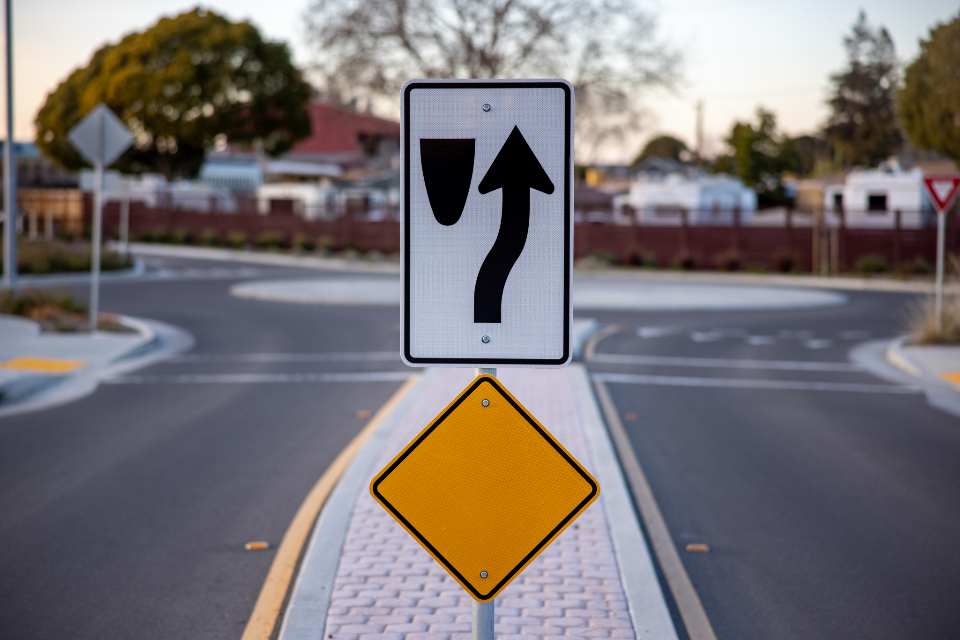
Outside the Gaeltacht, Irish road signage is bilingual: the Irish name in italics above the English one. Inside a Gaeltacht, official signage is generally in Irish only, because Gaeltacht place names have legal standing in Irish. The practical consequence for a visitor is that you cross an invisible line and your satellite navigation, your map and the signs stop agreeing with one another.
The most famous case is Dingle town itself, whose official name has been the subject of a long-running local and national dispute. You will see it referred to in Irish, in English, and in both, sometimes on the same road. Do not read anything sinister into this; it is a genuine and unresolved argument about how a place should be named.
Reading a place name
Irish place names are usually descriptive, and knowing a handful of elements makes the map far more legible. Baile is a town or townland. Cill is a church. Dun and caher both indicate a fort. Cnoc is a hill, tra a beach, inis an island, loch a lake, doire an oak wood, gort a field. Once you spot these, the anglicised names on the English map stop being noise: Caherciveen, Knocknagoshel, Inch and Tralee are all describing something.
A handful of words and roughly how to say them
What follows are rough English approximations, and Kerry Irish is Munster Irish, whose stress patterns and vowels differ from what you may have heard elsewhere. Nobody expects precision. The attempt is the point.
- Dia duit — hello. Say it something like “dee-a gwit”. Literally it means “God be with you”, and the traditional reply adds a second name to it. If you learn one phrase, learn this one.
- Go raibh maith agat — thank you. Roughly “gurra mah a-gut”. It is used constantly, including by people speaking otherwise entirely in English.
- Le do thoil — please. Roughly “leh duh hull”. Useful in a shop or bar and easy to say.
- Slan — goodbye. Say “slawn”. Short, universal, and one of the few Irish words that survives in everyday English use across the country.
- Slainte — cheers, or good health. Roughly “slawn-cha”. You will hear this from people with no other Irish at all.
- Failte — welcome. Roughly “fawl-cha”. You will read it on more signs than you can count, usually in the longer form meaning “a hundred thousand welcomes”.
- Oiche mhaith — goodnight. Roughly “ee-ha wah”, and a good note on which to leave a pub.
A few place names are worth practising as well, if only so you can ask directions and be understood. Corca Dhuibhne is close to “kurka gwee-na”. Dun Chaoin, the village facing the Blaskets, is close to “doon kween”. Ballinskelligs in Irish, Baile an Sceilg, ends with the same word as the famous island offshore.
The Blaskets and a literature written in a kitchen
The Great Blasket Island, off Dunquin, was inhabited until the community was evacuated to the mainland in the 1950s. In its last decades it produced an extraordinary body of autobiographical writing in Irish, by islanders themselves, which is now studied across the country and translated widely. Those books are the reason many Irish people know the name of a small island they have never visited.
This matters to a visitor for two reasons. First, it means the local language carries a literary weight that is genuinely felt in the district. Second, it means the interpretive centre at Dunquin and the boat trips to the island in season are not just scenery; there is a specific human story attached, and reading even one of the books before you go transforms the visit.
How to be a decent visitor in a language community
- Open in Irish, then let the conversation go where it goes. A greeting and a thank-you signal that you have noticed where you are. Nobody will hold you to a conversation you cannot have, and switching to English is completely normal.
- Do not ask people to perform. “Say something in Irish” is the request residents most dislike. It turns a person’s home language into a party trick.
- Do not interrupt a conversation already in Irish. If two people are talking and you need something, wait as you would anywhere, rather than assuming they will switch for you the instant you appear.
- Avoid the debate about compulsory Irish. Visitors sometimes offer opinions on Irish-language education policy within thirty seconds of arriving. It is a live and complicated argument, and outside views land badly.
- Notice the summer colleges. In summer, Gaeltacht households host teenagers who come to live and study through Irish. It brings the villages to life and it is a significant part of the local economy, so expect busy shops and full accommodation.
- Spend money locally. The language survives where people can make a living without leaving. Buying from the shop, the craft studio and the pub in the Gaeltacht is not sentimentality; it is the mechanism.
Where you will actually hear it spoken
If your aim is to hear Irish being used rather than displayed, go where people are doing something other than talking to tourists: the small shop in a village well off the main road, a pier in the morning, a church, a school gate, a session in a pub that is not on the coach route. Irish-language radio and television are widely listened to and watched, and switching on the radio in the car through west Kerry gives you an immediate sense of the language as a working medium rather than a museum piece.
And be patient with yourself. A visitor who leaves Kerry with four phrases and an ear for what the place names mean has understood something real about the county — which is that its landscape was named, described and argued over in a language that is still being spoken there.