
What the festival actually is
The Rose of Tralee is an international festival held in Tralee every August, built around a selection event in which young women of Irish birth or Irish descent, each representing a place, are chosen over several nights of interviews and performances until one is named the Rose of Tralee. Around that core sits a week of parades, street entertainment, funfair rides, markets, fireworks and music, and the whole thing is broadcast live on Irish national television to an audience far larger than the town could ever hold.
That description will already have provoked a reaction, and it is worth being straightforward about it. To some people the Rose of Tralee is a beloved national institution and a fixed point of the Irish summer. To others it is an anachronism they cannot take seriously. Both views are widely held in Ireland itself, and you will hear both in Tralee pubs during the festival. What is not in dispute is its scale: for one week in August this is one of the busiest towns in the country.
What it is not
It is not a beauty pageant, and the organisers have been firm about that for decades. There is no swimsuit round and no judging on appearance in the formal sense. The stage element is closer to a televised interview with a party piece attached — a conversation with the host, a song, a recitation, a dance, sometimes something distinctly eccentric. The selection weighs personality, background and the story a Rose has to tell about the community she represents.
Whether that distinction fully holds is a live argument in Ireland, and has been for years. But if you arrive expecting a conventional pageant, you will find something stranger and more particular: part talent show, part diaspora gathering, part county reunion, and unmistakably the product of a specific Irish idea of what a public occasion should feel like.
The long history behind it
The festival began in 1959, started by local businesspeople looking for something that would draw people back to a town steadily losing them to emigration. That origin still shapes it. The Rose of Tralee is fundamentally about the connection between a small Irish town and an enormous Irish diaspora, which is why Roses come from London and Sydney and Boston and Dubai as well as from the Irish counties.
The ballad
The name is far older than the festival. It comes from a nineteenth-century ballad, The Rose of Tralee, about a young woman named Mary, praised in the song less for her looks than for the truth in her eyes. The song is sung constantly during the week and will follow you around the town. Its authorship has been argued over for generations, and the local details attached to it have hardened into a story that may be more affectionate than documented. Treat what you are told about the real Mary as folklore rather than as record.
How it grew
From a local initiative it became a national television event, and the festival week expanded well beyond the selection itself. Formats have changed repeatedly over more than sixty years — the rules on age and marital status, the number of nights, the venue arrangements, the balance of televised and street events. If you read an older account of how it works, assume some of it is out of date.
What happens to the town in August
This is the part that matters most for a visitor, whether or not you care about the festival. For roughly a week, Tralee stops being a county town and becomes a very crowded event.
The street side
The centre fills. Streets are closed. There is a parade, usually the visual high point, with floats, marching bands and the Roses themselves carried through crowds several deep. A funfair is set up. Street performers work the town from early afternoon into the night. There is music, food stalls, markets and fireworks. Much of this is free and outdoors, and it is where families and casual visitors actually spend their time.
The pubs and the nights
Every pub in the town is full, most run extended music programmes, and the drinking culture around the festival is boisterous. Sessions that are quiet and traditional in March are loud and packed in August. If you want an intimate trad session, festival week is the worst week of the year to go looking for one.
The televised nights
The selection itself takes place across two evenings in a large venue, and tickets are limited, go early and are not a casual walk-up purchase. Most people in Tralee watch it in a pub or at home like everyone else in the country. Do not plan a trip around getting into the hall unless you have already sorted tickets.
Practicalities if you are coming for the festival
- Book accommodation absurdly early. Rooms in Tralee for festival week go months ahead, and prices rise accordingly. People routinely stay in Killarney, Listowel, Castleisland or the villages of the Dingle peninsula and travel in.
- Check the dates yourself. The festival is held in August, but the exact days move from year to year, and so do the parade time and the running order. Use the official festival source for the year you are travelling rather than an older article.
- Expect road closures and no parking. The centre is closed to traffic for large parts of the week. Park on the edge and walk, or use public transport, and build a lot of slack into any onward journey.
- Dress for rain and for standing. The parade and the street events run whatever the weather, and much of the enjoyment involves standing on a kerb for a long time. Waterproofs and comfortable shoes are not optional.
- It is a family event by day and much less so by night. Daytime is funfair and parade. Late evening in the centre is a large, cheerful, drink-fuelled crowd. Judge accordingly if you have small children.
An honest word if you are not here for the festival
Plenty of people arrive in Tralee in August without the faintest interest in the Rose of Tralee, because it is a convenient base for Kerry and because August is when they have leave. It is worth saying plainly what that will be like.
During festival week itself, Tralee is not a good place to be if you want quiet. Accommodation is scarce and dear, the centre is congested, restaurants need booking, the pubs are packed and the noise runs late. Anything you had planned that involves driving out of the town in the early evening will take longer than you expect. If your interest is the museum, the park, the greenway and the coast, you will enjoy all of them more in June or September.
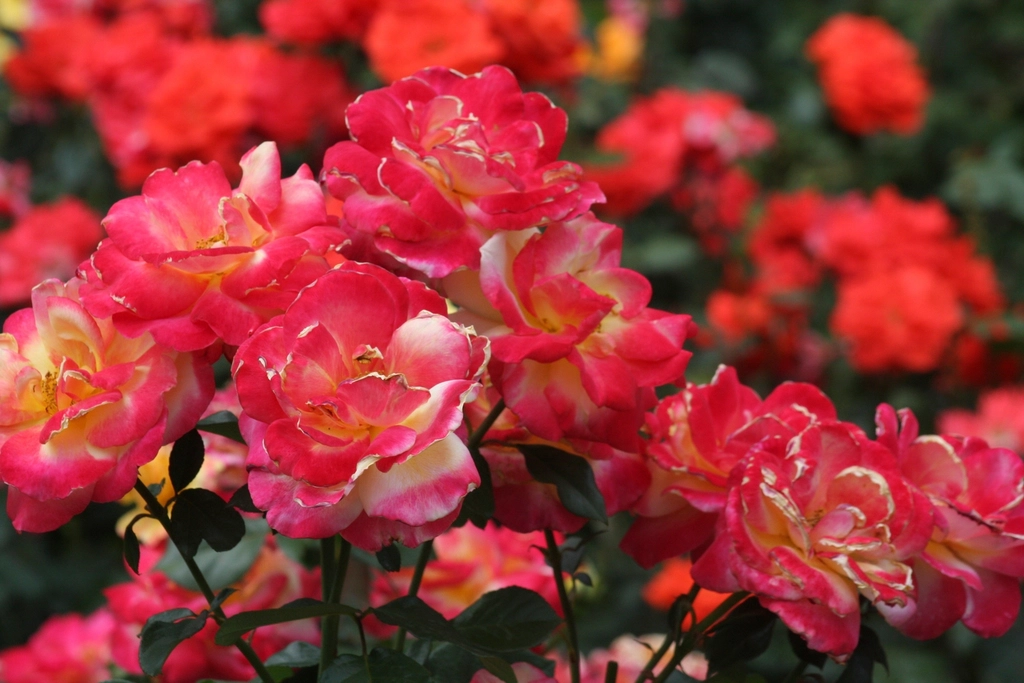
The rest of August, though, is simply high summer in a busy Irish county town, and perfectly pleasant. The rose garden in the Town Park is at its best. The town is well set up for visitors because it is used to them. If you can shift your dates by a week either side of the festival, you get the long evenings without the crush.
And if you find yourself here by accident
Stay for the parade. Even a determined sceptic will find something worth seeing in a small Irish town throwing everything it has at a single evening: the bands, the volunteers, the local clubs, the sheer number of people who have come home for it. You do not have to admire the format to appreciate what it is doing. The festival is, at bottom, a town keeping a line open to the people who left, and that is not a small thing in Kerry.
Getting the timing right
If the festival is your reason for coming, treat it as you would any major event: dates confirmed first, accommodation second, travel third, everything else afterwards. If it is not your reason for coming, look the dates up anyway, because the single most avoidable mistake a visitor to Tralee makes is booking that week without realising what it is. Either decision is a good one. Making it by accident is not.