
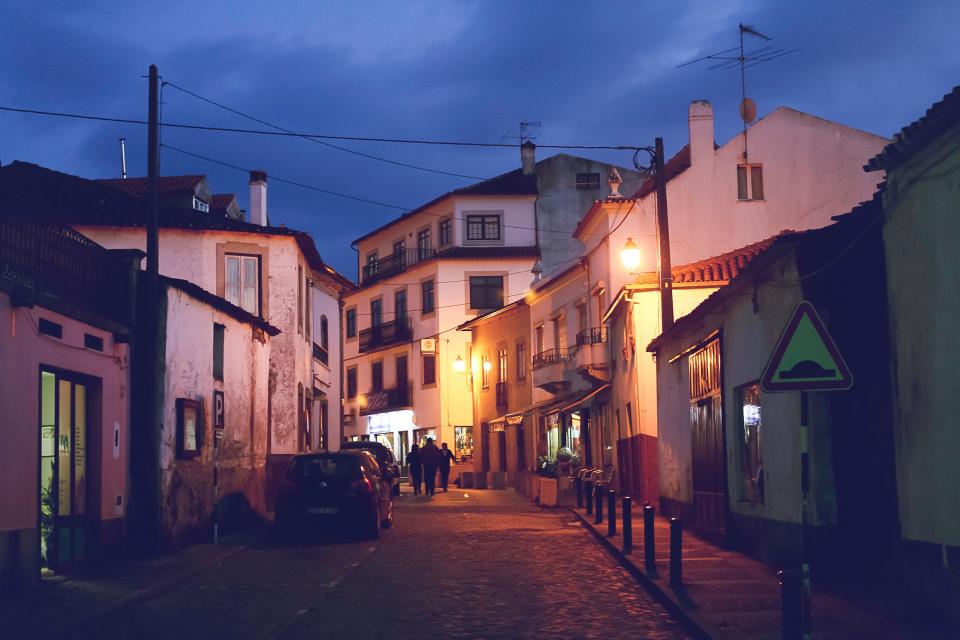
The shape of the town
Tralee sits at the head of Tralee Bay, where the flat ground around the mouth of the River Lee runs out into mudflat and channel, and where the Slieve Mish mountains close off the southern horizon. It is the county town of Kerry, which means it is an administrative and market town first and a visitor town some distance second. That is the single most useful thing to know before you walk it. Tralee is not arranged for tourists. It is arranged for the business of a county: courts and council offices, schools, a hospital, a university campus, a farming hinterland and the shops that serve all of them. Walk it expecting a picture-postcard Irish town of coloured shopfronts and you will be puzzled by the traffic and the vacancies. Walk it as a working town with a long and fairly bruised history, and it becomes genuinely interesting.
The good news for anyone on foot is that the centre is compact and almost entirely flat. You can cross it in fifteen minutes. It has one grand set-piece street, one large green space, a knot of older commercial lanes and a river that most people never notice. The whole thing can be walked in an hour if you are brisk, or stretched to half a day without inventing filler.
Denny Street
If Tralee has a spine, it is Denny Street. It runs in a straight line from the busy junction at the top of the town down to the gates of the Town Park, and it is the only street in Tralee laid out with deliberate architectural ambition. The terraces of tall, flat-fronted brick and stucco houses on either side date from the nineteenth century, when the Denny family — the English planter dynasty granted much of Tralee after the Desmond wars — cleared their old mansion site and set out a new street on it. The result is a street that feels imported: wide, formal and Georgian in temper, standing at an angle to the older, more tangled town around it.
What to look at as you walk it
Look up. The ground floors have been altered repeatedly over two centuries, but the upper storeys still show the original proportions, the fanlights, the door surrounds and the ironwork. Look at the doors in particular, several of which are worth a photograph on their own. There are monuments at the upper end and benches under mature trees along it.
The lower end
At the park end stands the Ashe Memorial Hall, a heavy classical building that houses Kerry County Museum and, usually, the tourist information point. It is named for Thomas Ashe, the Kerry-born republican who died in 1917 after being force-fed on hunger strike. Even without going in, the building anchors the street and gives it a proper destination at each end.
The Mall, the Square and the older lanes
Turn away from Denny Street and the town changes character immediately. The Mall, Castle Street, the Square and the streets running off them are the commercial heart: narrower, busier, more mixed, with the ordinary retail life of a county town. This is where you find the butchers, the bakeries, the chemists, the bookmakers and the pubs. The street names are worth reading as you go, because several of them are the only surviving trace of what stood there. Castle Street records the vanished castle of the Fitzgeralds, Earls of Desmond, who made Tralee their principal seat and whose town was destroyed at the end of the sixteenth century. Nothing of the castle survives above ground. The name is the monument.
These streets are not manicured: well-kept frontages beside shuttered ones, delivery vans, traffic squeezing through spaces never built for it. That mix is honest, and it is the town people in Kerry actually use.
The Town Park and the rose garden
Tralee Town Park is the best thing about walking the town and it is often the thing visitors miss because it hides behind the museum. It is large by the standards of an Irish town of this size, with broad lawns, mature trees, water and long looping paths, and it is genuinely used — prams, lunch breaks, dog walkers, teenagers, all of it.
Its centrepiece is the rose garden, which is exactly what the name promises: a formal planted garden of roses, laid out on a scale that no ordinary town park would justify. It exists because of the Rose of Tralee festival and the town’s long association with the flower and the ballad. In high summer it is genuinely impressive, heavily scented and full of colour. Out of season it is a set of bare beds and clipped structure, so time your expectations accordingly.
The market
Tralee has a regular farmers’ market with local producers — vegetables, baking, cheese, preserves, sometimes fish — and it is a good hour if you land on the right day. The day, the hours and the exact pitch have all moved over the years, so do not take anyone’s word for it, including this one: ask at the museum desk, at your accommodation or in any shop on Denny Street on the morning you arrive. It is a small market rather than a large covered one, and it is worth catching mainly for the producers you can talk to.
What an hour and a half-day take in
An hour
- Denny Street, top to bottom. Ten minutes at a stroll, longer if you stop for the doorways and the monuments. It gives you the town’s one piece of formal planning and orients you completely.
- A loop of the Town Park. Twenty minutes, more in summer if the roses hold you. This is where you get the sense of scale and the view south towards the mountains on a clear day.
- The Mall and the Square. Fifteen minutes of ordinary town, which is the point. Buy something. The shops here are largely independent.
A half-day
With three or four hours you can do all of the above properly and add real substance. The obvious addition is Kerry County Museum, which deserves an hour and a half rather than a token twenty minutes. After that, walk out of the town westward along the canal towards Blennerville, where the windmill stands white against the bay — it is a level walk of a couple of miles from the town, on a made path, and it takes you out of the streets and into the estuary landscape that explains why Tralee is where it is.
Practical notes for walking the town
- It is flat, and that matters. Unlike most Kerry towns, Tralee makes no physical demands. It suits tired legs, pushchairs and anyone who has spent the previous day on a mountain road.
- Weather changes the walk entirely. This is the Atlantic edge of Ireland. Bring a waterproof even in July, and treat any dry spell as the moment to be outdoors rather than in a museum.
- Traffic is the main nuisance. The centre carries a lot of it, and some junctions are unfriendly on foot. Cross at the lights, and be aware that pedestrianised space is limited.
- Sunday and Monday are quieter. Shops keep county-town hours rather than resort hours, and some close early or entirely. If your walk depends on the shops being open, come midweek or on a Saturday.
- Do not judge it in the first ten minutes. The approach roads and the retail edges are the least appealing part of Tralee. The centre, the park and the estuary are all better than the first impression suggests.
Why the walk is worth doing
Tralee rewards a slow, curious walker more than a photographer looking for a single perfect view. What you take away is a sense of layers: a medieval Fitzgerald town that was erased, a planter town laid out on top of it, a nineteenth-century canal and railway town that tried to reach the sea, and a modern county centre still working out what it is. None of that is signposted. You read it in street names, in the odd angles where old lines meet new ones, and in the sudden formality of Denny Street cutting through everything else. An hour gets you the outline. Half a day gets you the argument.